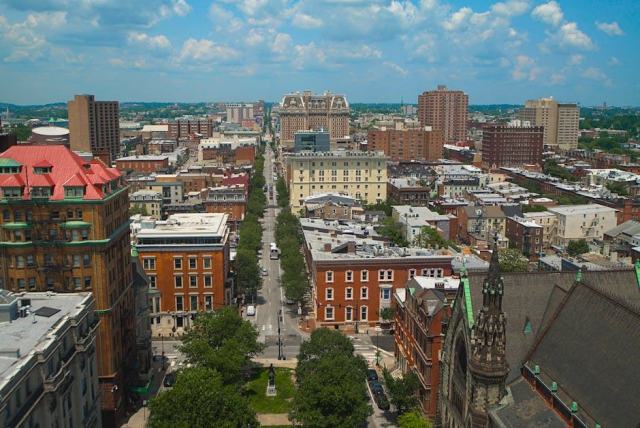
Baltimore real estate is defined by its iconic rowhouse stock — over 100,000 brick and Formstone row homes spread across 278 distinct neighborhoods, each with its own price tier and character. Median prices citywide hover around $180,000–$230,000, far below the DC suburbs, but the range is enormous: Federal Hill, Fells Point, and Canton rowhouses sell for $350,000–$600,000+, while outer Baltimore neighborhoods like Morrell Park, Irvington, and Westgate offer entry points below $120,000. Johns Hopkins University and Johns Hopkins Hospital anchor healthcare employment in East Baltimore and Homewood, generating demand across multiple zip codes. The Port of Baltimore, the Inner Harbor hospitality sector, and a growing tech scène supplément the employment base.
Mortgage options for Baltimore home buyers
FHA loans dominate the Baltimore City entry-level market, where 3.5% down on rowhouses priced under $300,000 is realistic for working households. VA loans serve veterans and active-duty personnel from nearby Fort Meade, Aberdeen Proving Ground, and Andrews AFB, with zero-down purchase options in a market where even desirable neighborhoods remain accessible. Conventional financing applies in premium neighborhoods like Roland Park, Guilford, and Homeland. Baltimore City offers its own homebuyer incentive programs — LIVE Baltimore, the Vacants to Value initiative, and the Buying Into Baltimore program — that can provide meaningful closing cost and down payment support.
Investors find Baltimore among the highest-yielding urban markets on the East Coast, with gross cap rates on small multi-family and rowhouse rentals reaching 9%–14% in transitional neighborhoods. Title insurance is especially important in Baltimore given the complexity of rowhouse title chains and the prevalence of tax sale and estate properties. Transfer taxes at the city and state level add approximately 2%–3% to closing costs. Always run thorough inspections on older rowhouse stock — lead paint remediation, structural pointing, and plumbing updates are common capital requirements in Baltimore's pre-war housing inventory.