
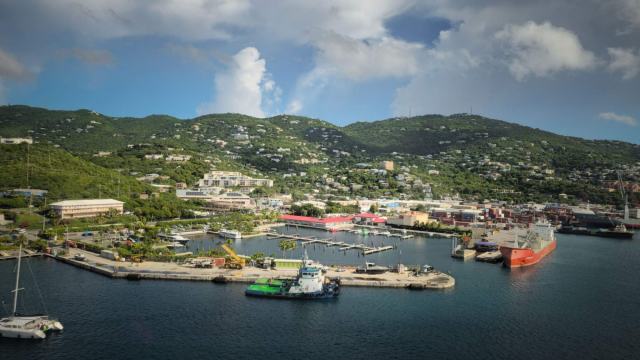
Estate Charlotte Amalie real estate covers the hillside neighborhoods that rise above the capital of the US Virgin Islands on St. Thomas. Views over the harbor drive demand, while steep lots, retaining walls, water storage and road access decide how comfortable and costly a home will be to own.
Estate Charlotte Amalie real estate on St. Thomas occupies the hillside residential areas surrounding the capital, offering buyers views over the harbor and Charlotte Amalie town at various price points depending on elevation, lot size, and property condition. This is a primarily residential community of single-family homes and small estates that serves the island's working population and longer-term expat residents.
A capital with a Danish past
Charlotte Amalie grew as a Danish colonial port, and its historic center still shows that heritage in its stone warehouses, narrow alleys and stepped streets climbing the hills. According to the US Department of State's Office of the Historian, the United States purchased the Danish West Indies in 1917. Today the harbor hosts cruise ships and ferries, and the town is the territory's administrative and commercial center. For hillside residents, this means jobs, government offices, shops and medical care within a short, if often congested, drive.
What buyers should know about Estate Charlotte Amalie
Home inspections in Estate Charlotte Amalie run $400-$650. Hillside properties should be assessed for retaining walls, drainage systems, and road access quality, as steep terrain creates maintenance obligations unique to island construction. Agent commissions are 5-6% of the sale price. Estate Charlotte Amalie homes with harbor views command premiums of 20-40% over comparable properties without harbor sightlines.
Living on a slope
Steep lots bring specific questions. Retaining walls should show no bulging, cracking or leaning, and weep holes should drain freely; a structural engineer is worth hiring when walls support the house or the driveway. Heavy tropical rain runs fast down the hills, so gutters, culverts and the path water takes around the house matter. Access roads can be narrow and steep, which affects deliveries, construction work and resale to buyers who do not want to drive them daily. Most homes rely on a rainwater cistern, which should be inspected along with the roof that feeds it. Similar hillside settings can be compared in Contant, another hillside area above the town and Estate Thomas, also close to the town.
Closing in the USVI takes 45-60 days. USVI property taxes are low by national standards. Hurricane insurance is mandatory for financed purchases and varies based on construction type, elevation, and storm exposure. Sellers should invest in professional photography that captures harbor and ocean views, which are the defining feature buyers are paying for in this hillside location above the capital.
Insurance and storm preparation
Elevation can protect a home from storm surge, but it also exposes it to stronger winds. Insurers look at roof type, shutters, window protection and the age of the structure, so documentation of recent work helps both the buyer and the insurer. Asking for a quote early, before the offer is final, avoids discovering at closing that coverage costs far more than expected. For an overview of all three islands, see the US Virgin Islands real estate guide.